Chapter 4b - If Else
Conditional Structure
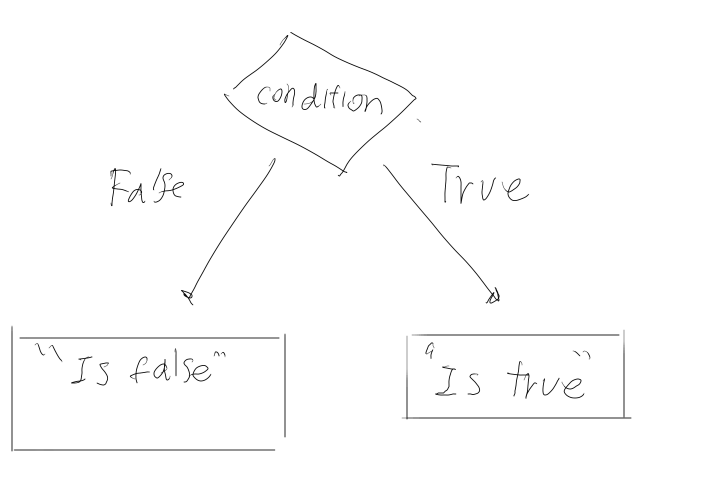
If Else
public class Main {
  public static void main(String[] args) {
    if(false){
      System.out.println("Is True");
    }else {
      System.out.println("Is False");
    }
  }
}
🧪 Try the code out~!
Practice
- What do you think the program will be printing if we change
falsetotrueinline 3?
Using Comparisons to resolve If Else conditionals
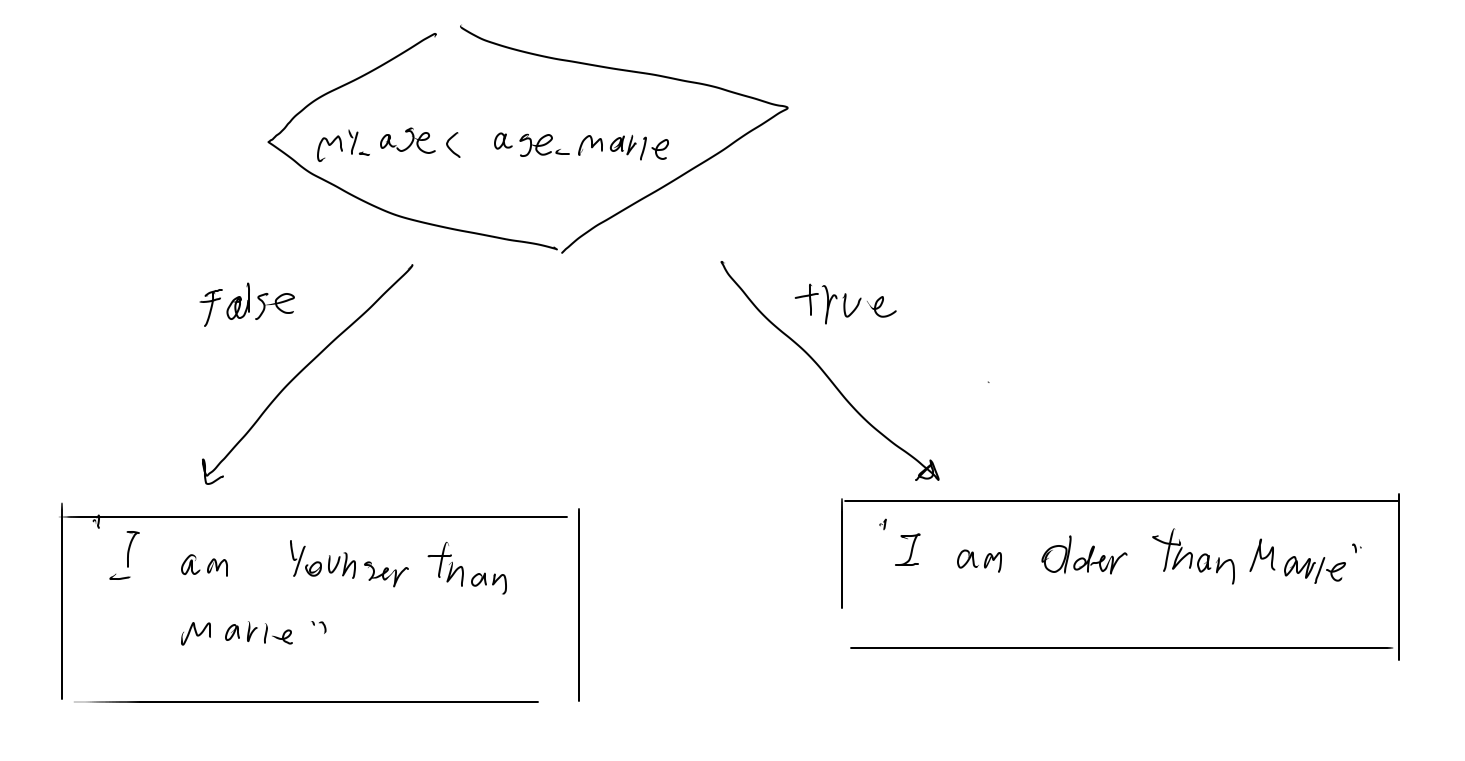
class Main{
 public static void main (String args[]){
    int my_age    = 21;
    int age_marie  = 25;

     if(my_age < age_marie){
       System.out.println("I am Younger than Marie");
     }else if(my_age > age_marie){
       System.out.println("I am Older than Marie");
     }
   }
}
🧪 Try the code out~!
Comparison Operators
| Comparison Operator | Definition | Example |
|---|---|---|
== | Equals | 2==2 -> True, 2==4 -> False |
!= | Not Equal | 2!=3 -> True, 2!=2 -> False |
> | Larger | 3>2 -> True |
< | Smaller | 4 < 5 -> True |
>= | Larger or Equals | 4 >= 2 -> True, 2>=2 -> Tru |
Else IF
note
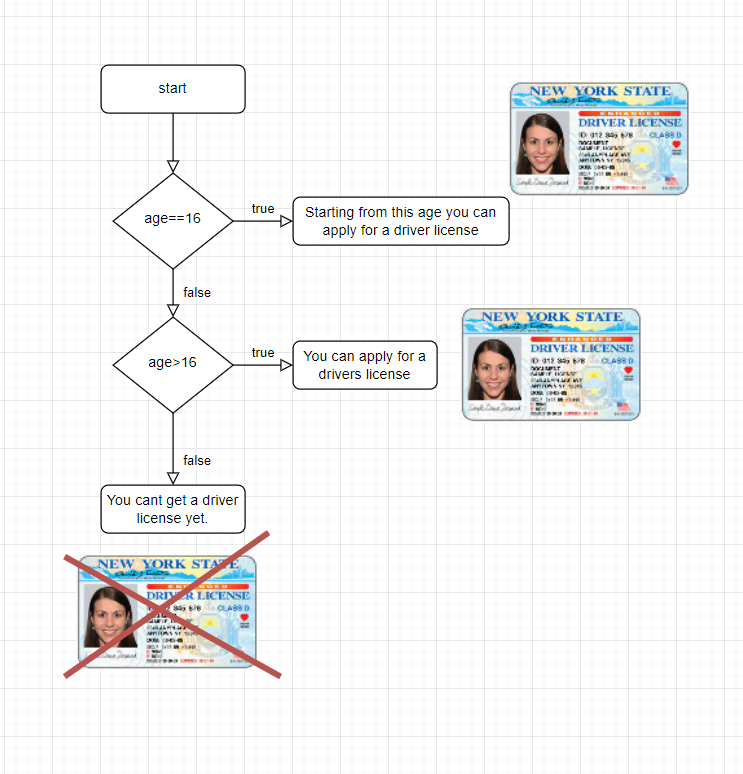
- I created this using draw.io
public class Main {
  public static void main(String[] args) {

    int age = 17;
    if(age == 17){
      System.out.println("Age is 17");
    }else if(age>17) {
      System.out.println("You are an adult now");
    }else{
      System.out.println("You are still a kid.");
    }
  }
}
Explaination:
If (Boolean condition1) Then

    (perform computation or action)

Else if (Boolean condition2) Then

    (perform another computation or action)

Else
    (perform a default computation or action)
🧪 Try the code out~!
Try it: if / else if / else
if / else if / else
1 / 2How many of the branches below can run for a single execution?
if (x > 10) {A();} else if (x > 5) {B();} else {C();}
Pick an answer to see if you are right.
Exercise
Complete the following program so that it prints if number is positive or not.
- If the input is positive it should print:
num is positive. - else If the input is negative it should print:
num is negative - else (the case where input is neither positive or negative) it should print:
num is ZERO (0)
🙋♀️ Sample expected program:
- Try entering
5 - Try entering
-5 - Try entering
0
Nested Conditionals
👀 Curriculum - Nested Conditionals
public class Main{
 public static void main(String args[]){
 int num = 25;


 if (num >5){
   System.out.println("num is greater than 5");
   if(num>10){
      System.out.println("num is larger than 10");
      if(num>20){
        System.out.println("num is larger than 20");
      }
   }
  }else if(num<0){
    System.out.print ("num is negative");

  }else{
    System.out.print ("num is ZERO (0)");
  }
 }
}
Answer the following:
- What do you think it will print if num is 15
- What do you think it will print if num is 20
- What do you think it will print if num is 25
🧪 Try the code out~!
Chapter summary
Key takeaways
if/else if/elseruns exactly one branch — the first condition that is true, or the finalelseif none match.- Order matters: conditions are checked top to bottom, and the chain stops at the first match, so put the most specific checks first.
- Nested
ifs (anifinside anotherif's block) let you check a second condition only when the first already passed. - Leaving out the final
elseis fine if you genuinely have nothing to do for the "none of the above" case — but it is easy to forget a case by accident, so double check.
Exercises
Activity: Sign of a number
Read an integer. Print positive, negative, or zero.